Funeral and Sympathy Flowers: Etiquette, What to Send, and What to Skip
In fifteen years owning a flower shop, the sympathy arrangements were the orders I cared most about getting right. Mother's Day arrangements get re-photographed and posted to Instagram. Sympathy arrangements get placed at services and remembered for decades. The difference matters in how the order should be approached.
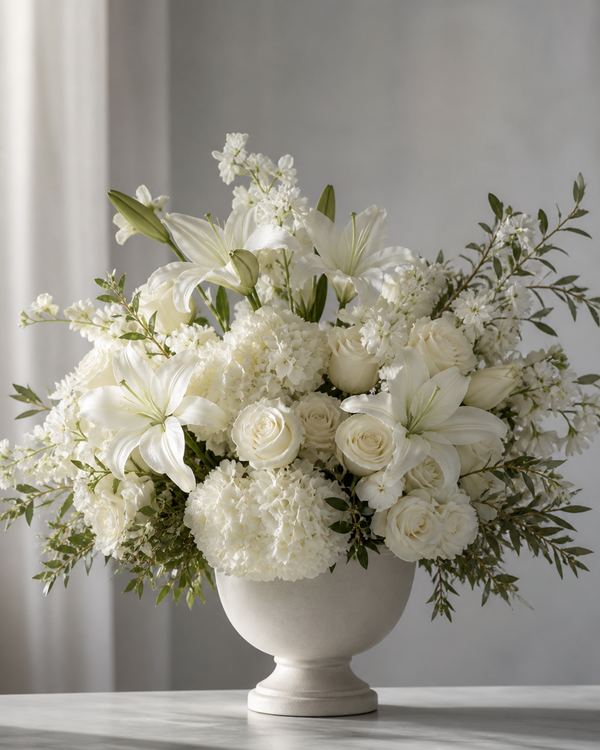
This article is what I tell people when they call confused, often late at night, often within hours of getting the news. The basic etiquette, the regional and religious differences that change what is appropriate, what to write on the card, and the small things that mean the difference between an arrangement that lands well and one that creates an awkward moment.
If you are reading this because something just happened, the short version: a tasteful arrangement of white flowers in a low vase, sent to the family's home, with a card that names a memory rather than offering condolences in the abstract, is right in 90 percent of cases. The rest of this article is the other 10 percent.
What white lilies actually mean
White lilies are the most common funeral flower in the Western Christian tradition. The symbolism: purity, restored peace, the soul of the departed returning to a state of innocence. They are the right answer for most Christian funerals and most general non-religious sympathy contexts.
The specific lily species used is usually the Stargazer or Casablanca lily, both of which produce dramatic white blooms with strong fragrance. The fragrance is part of the reason they are common at funeral services; they fill a room.
A note on the fragrance: it can be overwhelming in small spaces or for some recipients with sensitivities. If you are sending an arrangement to a family's home rather than a service, mixed white flowers (alstroemeria, white roses, white spray roses, white stocks, eucalyptus greenery) often land better than pure-lily arrangements.
Not all "lilies" are funeral lilies
The word "lily" is used loosely. The funeral lily is from the Lilium genus: Stargazer, Casablanca, Easter lily, Oriental lily. Long-stemmed, large-faced, dramatically scented, each bloom lasting four to seven days.
Day lilies (Hemerocallis) are a different genus altogether. Each bloom lasts a single day and they are usually orange, yellow, or burgundy, not white. They are garden flowers, not florist flowers, and they are not used in traditional sympathy work. If a florist offers you a "lily" arrangement that is heavy on small trumpet-shaped orange or yellow blooms, those are day lilies, and they are the wrong call for a funeral.
Calla lilies (Zantedeschia) are technically not true lilies either, but they are commonly used in sympathy work. Sleek, sculptural, often white. Appropriate, particularly for modern or restrained services. They carry an especially strong dual symbolism in Italian Catholic tradition: the same flower is the classic bride's bouquet at Italian weddings (purity, the start of a new life) and a regular fixture at Italian funerals (purity, the soul's passage). White is the wedding and most-funeral usage; purple calla specifically signals mourning. If the family has Italian roots, white calla lilies are likely to read as exactly the right gesture.
Peace lilies (Spathiphyllum) are the potted "plant" gift category. White spathe-and-spadix blooms on green foliage. Long-lived as a houseplant, which is why families often take them home from the service. Also not a true lily.
When you ask for "white lilies" at a florist, the right ask is "Stargazer, Casablanca, or Oriental lilies." That gets you the funeral flower people picture.
The religious and cultural differences that matter
Not every faith tradition uses flowers the way Western Christianity does. The single most important rule before sending is to know the family's religious context.
Jewish funerals: Flowers are traditionally NOT sent to Jewish funerals. The mourning customs of shiva (the seven-day mourning period) instead emphasize visits, food, and donations to charitable causes. Sending flowers to a Jewish family in mourning can come across as ignorant of tradition. The right response: send a meal through a kosher-meal-delivery service, or make a donation in the deceased's memory to a charity meaningful to the family. If you do choose to give in memory, the FTC's guidance on donating to charity is a quick way to confirm a charity is legitimate before you give.
Muslim funerals: Flowers are sometimes accepted but are not traditional. Modesty is a strong value in Muslim mourning customs. If you do send flowers, simple white arrangements are appropriate. Avoid elaborate displays. Donations to charity in the deceased's name are often more aligned with the tradition.
Hindu funerals: White flowers, typically chrysanthemums or carnations, are appropriate. Avoid red, which is considered inauspicious in mourning contexts.
Buddhist funerals: White flowers (lilies, lotus, chrysanthemums) are traditional. Avoid red.
Catholic funerals: Standard Western Christian flower etiquette applies. Lilies, white roses, and mixed white arrangements are all appropriate. Some Catholic communities have specific traditions around mass cards that accompany arrangements; if you are unsure, the funeral home staff can advise.
Orthodox Christian funerals (Greek, Russian, etc.): Flowers are traditional but the arrangements are often distinctive (white only, specific shapes). The funeral home will often coordinate with families on what is appropriate.
Quaker and Mennonite traditions: Often prefer simple, unadorned services. Modest arrangements or no flowers at all are appropriate. When in doubt, ask.
Southern Black Christian traditions: Often more elaborate floral displays than other Christian traditions. Standing sprays, casket sprays, and named arrangements ("Beloved Mother," "Dear Friend") are common.
If you do not know the family's tradition and cannot ask, mixed white arrangements sent to the home (rather than the service) are the safe-default option. They are appropriate in nearly every tradition, do not assume specific ritual context, and give the family flexibility in placement.
→ Browse Teleflora's Sympathy and Funeral arrangements. Local-network florists, same-day or next-day delivery, traditional sympathy arrangements with white lilies, white roses, and mixed sympathy bouquets.
The arrangement formats you will see in the room
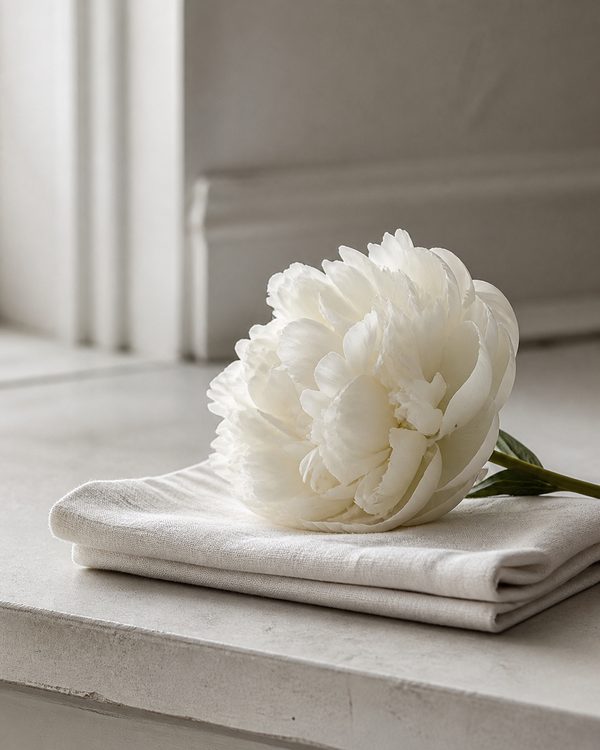
Before the four-types breakdown below, here is what each format actually looks like. The room at a typical funeral or memorial uses a combination of these. Knowing them by sight helps you understand what is already there, what slot is open, and what you are actually buying when a florist asks "casket spray or standing spray?"
The four arrangement types and when each is appropriate
Type one: standing spray. A tall arrangement on an easel, designed for placement at a funeral service. Casket-side or in the receiving room. Common at Christian and non-denominational services. Sent to the funeral home, not the family's residence. Cost: $200-500 depending on size and floral choices.
When to send: from immediate family, close friends, or organizations the deceased was affiliated with. Not from distant acquaintances; an over-elaborate display from someone the family did not know well can feel performative.
Type two: casket spray. The arrangement that drapes the casket itself. Always from immediate family, never from anyone else. Coordinated through the funeral home, not directly with a florist. Cost: $300-800.
If you are not immediate family, this is not your arrangement type.
Type three: home arrangement. Sent to the family's residence, intended for them to keep and use during the mourning period. Lower vase, mixed flowers, in a vessel they can re-use afterward. Cost: $60-150.
When to send: this is the most appropriate sympathy gesture for friends, coworkers, and extended family. The arrangement comforts the family during the days when they have a houseful of visitors and limited mental energy for hosting.
Type four: graveside or memorial arrangement. Sent to the burial site for placement at the grave, sometimes weeks or months after the service. Often single-stem arrangements, or wreaths designed for outdoor durability. Cost: $40-100.
When to send: anniversaries of the death, birthdays of the deceased, holidays. The graveside arrangement is part of ongoing remembrance rather than initial mourning.
When to use colors other than white
White is the safe sympathy default but not the only acceptable palette. Specific colors carry specific meanings, and some are expected for particular traditions, ages, and relationships. The wrong color is not a disaster. The right color signals attention.
Purple
Purple is the second-most-common sympathy color after white-and-green, and the one most likely to be appropriate when white feels too plain. It carries weight in two distinct traditions.
Liturgical purple. In Catholic and Eastern Orthodox practice, purple is the color of penitence and mourning. It is the color the priest wears during Lent and at funerals. A Catholic sympathy arrangement with purple iris, lisianthus, or stock paired with white lilies and roses reads as visually right to anyone in the tradition. It is also a respectful choice for the funerals of clergy or deeply religious families even when the tradition is not your own.
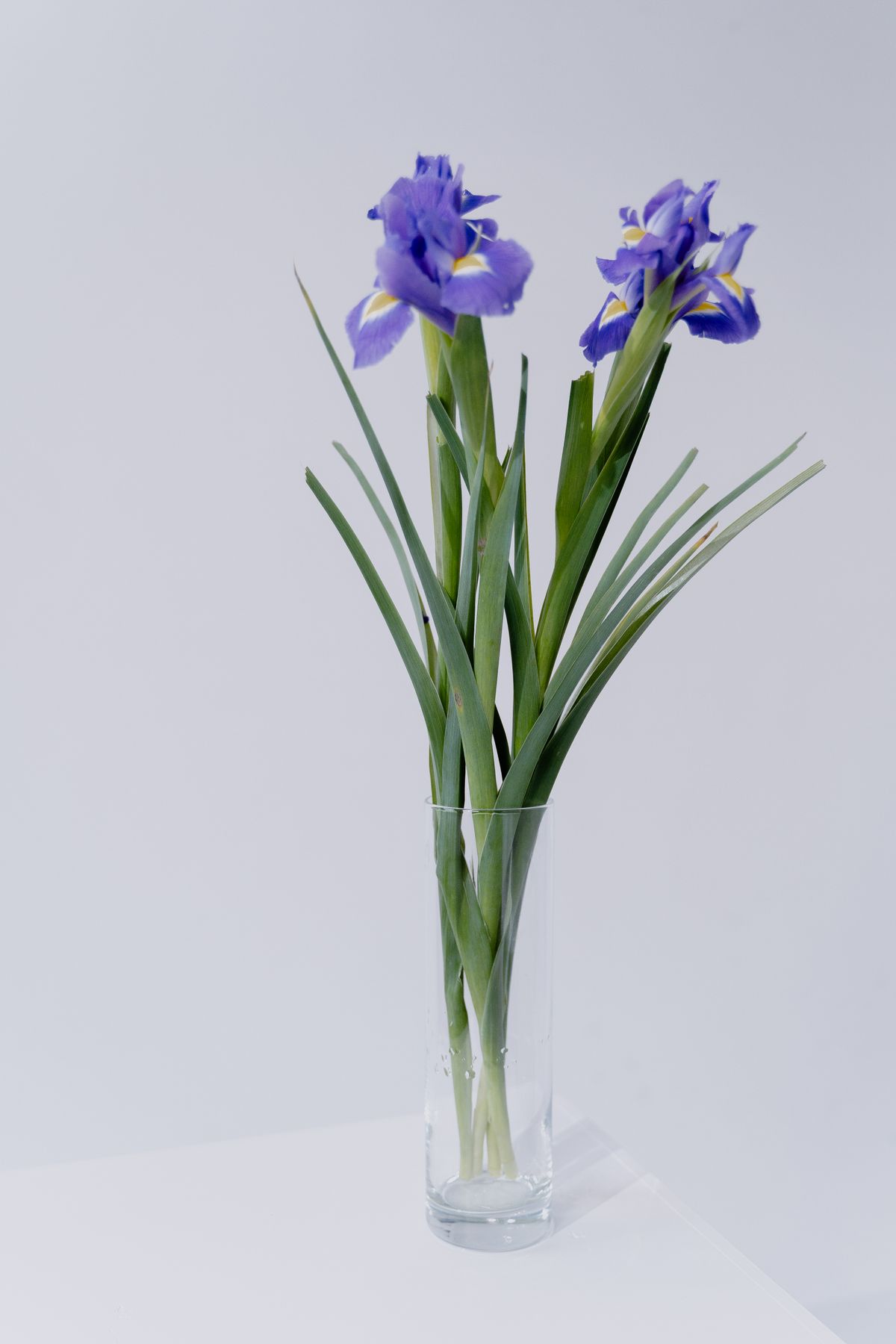
Purple iris in a clear vase. The Catholic and Orthodox tradition reads this as the right color for mourning.
Royal-purple mourning. Outside the liturgical context, deep purple has a centuries-old association with mourning in Western Europe, particularly for older women, matriarchs, and dignified figures. A standing spray with deep purple roses, dahlias, or lisianthus reads as honor and respect. Lavender carries a related but softer meaning: remembrance, often used at memorial services months or years after the death.
When in doubt about whether purple works: ask the funeral home what the family has already ordered. If purple is in the room, follow the lead. If everything is white-and-green, do not be the first to introduce a different color.
Pink and blush
Soft pink, blush, and pale peach are the gentlest deviation from white. Appropriate for the funeral of a younger person, a child, a mother of young children, or anyone whose family has indicated a softer or less formal tone. A spray of white roses with pink peony or blush garden roses reads as tender. Avoid hot pink. It crosses into celebration territory.
Yellow and soft gold
Pale yellow signals friendship and warmth. A traditional choice from longtime friends of the deceased, particularly for older men where yellow roses carried a specific meaning ("friendship" in the Victorian language of flowers). Bright marigold or lemon yellow is too celebratory. Cream and pale-butter yellow are appropriate.
Red
Red is the most contentious sympathy color. Within the immediate family, deep red roses are appropriate from a spouse, signaling romantic love. From anyone outside the immediate family, red roses are unusual at a traditional funeral and should be avoided unless the family has explicitly chosen a red palette. Red carnations have a different reading. They are common in some Eastern European and Greek Orthodox practices and acceptable in those contexts.
Bright multicolor (celebration of life)
If the family has used the words "celebration of life" rather than "funeral" or "memorial service", brighter and more varied palettes are appropriate. The deceased's favorite colors, garden flowers, sunflowers, mixed wildflowers all work. Follow the lead of the announcement and the family's communication. If the family has not said "celebration", do not assume it.
What to write on the card
The cards that get kept are the ones that name a specific memory, not the ones that offer generic condolences. The formula:
One sentence naming a thing about the deceased. Something specific, something the family will remember, something true. Not abstract praise; concrete observation.
One sentence connecting that thing to the writer. What the deceased meant to you specifically. Why this is hitting you. What you took from knowing them.
One sentence offering presence, not advice. "Thinking of you" is too generic. "I am here for [specific thing] if you need me" is better. "Holding you in my mind this week" is better.
The cards that miss: "Sorry for your loss." "Thoughts and prayers." "She was a wonderful woman." All true, all generic, all forgettable.
The cards that land: "Your father told me the most ridiculous story about a fishing trip in 1987 every time I saw him, and it got slightly different every time, and I will miss it so much." That is what gets kept.
Three sentences. Specific. True. Signed.
The timing question
Sympathy arrangements are most welcome during a specific window: from when the family announces the death until about ten days afterward. Earlier than that and you are forcing the family to react before they have processed. Later than that and the arrangements pile up after the active mourning period and can feel performative.
The exception: graveside arrangements at anniversaries, which are welcome at any specific moment that matters. The first anniversary of a death is often particularly hard. A simple graveside arrangement on that date can mean a great deal to a family.
Some traditions extend the active mourning period (Jewish shiva is seven days; some Catholic traditions emphasize the 30-day mark and the one-year mark; Hindu traditions often have a 13-day period). Knowing the family's specific tradition helps you time the gesture correctly. The National Institutes of Health's MedlinePlus guide to grief and bereavement is a useful plain-language reference on how mourning timelines actually unfold for the people receiving these gestures.
What not to send
Three categories of arrangement to avoid for sympathy contexts.
Bright multicolored arrangements. Yellow, orange, hot pink, red mixed with bright greens. These read as celebratory rather than reflective. Save them for birthdays and congratulations.
Living plants in elaborate ceramic vessels. Sometimes appropriate (a peace lily plant has a specific symbolism in some traditions) but often the family does not have the energy or interest to take care of a new plant in the middle of mourning. The plant becomes a chore. Cut flowers expire on their own; living plants demand attention.
Edible arrangements (fruit baskets, chocolate spreads). These are sometimes welcomed but are increasingly seen as the wrong category. The family already has neighbors bringing food. They do not need a Costco-sized fruit display. If you want to send food, work with a meal-delivery service that brings actual prepared meals on a schedule.
The practical detail nobody mentions
If you are coordinating with multiple people who all want to send something (a workplace sending a collective arrangement, a friend group pooling resources), one larger arrangement is almost always better than multiple smaller ones. The family has limited surface area in their home for vases. Five small arrangements crowd a coffee table; one larger arrangement is more livable.
Coordinate. One person orders. The card lists the contributors.
The honest summary
Sympathy flowers are one of the things flower shops do well, and one of the things people do poorly when they have not had to send them often. The mistakes are predictable: wrong color choices, wrong arrangement type, wrong timing, generic cards. The right answers are predictable too: white flowers, sized to the relationship, sent to the home in most cases, with a specific card.
When in doubt, mixed white arrangement, sent to the home, three sentences on the card naming a specific memory. That formula is right in nearly every situation that does not involve specific religious tradition.
For the situations that do involve specific religious tradition: ask. Or send something other than flowers (a meal, a charitable donation in the deceased's name, a handwritten note alone).
The arrangement matters. The thoughtfulness behind it matters more.
Frequently Asked Questions
What is the difference between funeral flowers and sympathy flowers?
Funeral flowers are sent to the service itself: standing sprays, casket sprays, and wreaths placed at the funeral home or chapel. Sympathy flowers are sent to the bereaved family, usually to their home, to comfort them through the days of grief. Funeral flowers are public and ceremonial; sympathy flowers are private and personal. Many people send both, but if you can only do one, a sympathy arrangement to the home is the safer choice for friends and coworkers.
What color flowers should you send for a funeral or sympathy gift?
White is the safe default across nearly every tradition: white lilies, white roses, white hydrangea, and mixed white with green foliage. Soft accents like blush, lavender, and pale yellow are appropriate for a younger person or a less formal tone. Avoid bright red, orange, and hot pink for traditional services unless the family has explicitly asked for a celebration-of-life palette.
Is it ever wrong to send flowers after a death?
Yes. Flowers are not customary at Jewish funerals, where food sent during shiva or a charitable donation is the expected gesture. Muslim, Quaker, and Mennonite traditions also lean toward simplicity or no flowers. When the family has requested donations in lieu of flowers, follow that request. If you do not know the tradition and cannot ask, a simple mixed-white arrangement sent to the home is appropriate in almost every case.
How much should you spend on funeral or sympathy flowers?
Cost should match your relationship to the deceased. A vase or home arrangement from a friend or coworker runs roughly $60 to $150. Standing sprays from family or close friends run $200 to $500. Casket sprays, which come only from immediate family, run $300 to $800. The thoughtfulness of the card matters more than the size of the arrangement.
Should you send flowers to the funeral home or to the family's home?
It depends on your relationship and the format. Standing sprays, wreaths, and casket sprays go to the funeral home for the service. Smaller comfort arrangements go to the family's home, which is the most appropriate gesture for friends, coworkers, and extended family. When you are unsure of the tradition, the home is the safer destination because it does not assume a specific ritual context.
→ Send Teleflora sympathy arrangements through their network of local florists. Same-day delivery to home or service. Traditional white lily arrangements, mixed sympathy bouquets, standing sprays for funeral services.
Have a sympathy-sending question or a tradition you want me to look up? Send it to stories@local-florists.shop. The right gesture is sometimes the small one.