Mother's Day Carnations: The Tradition, the Colors, and How to Get Them in Time
Quick answer: Carnations are the official Mother's Day flower because Anna Jarvis handed out white carnations at the first observance in 1908 to honor her late mother. Color carries meaning: red carnations are for a living mother, white for a mother who has passed, and pink for a mother's enduring love. They last seven to fourteen days in a vase, longer than most roses, and cost less.
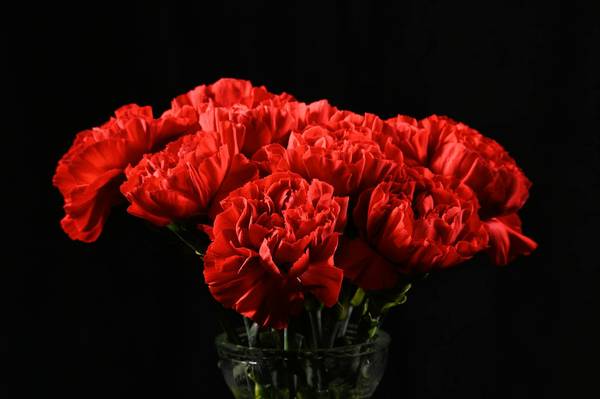
Mother's Day is Sunday, May 10. Seven days out from when this is being written. If you are looking for carnations specifically, you already know something most people sending flowers this week do not: carnations are not a default budget pick. They are the official Mother's Day flower, and they have been since 1908. The reason is a story about one woman and her mother, and the color you pick still means something specific.
I ran a flower shop for fifteen years. Every May, a handful of customers would come in and ask for carnations by name. Not roses, not lilies, not "whatever is nice." Carnations. Almost without exception, those were the customers who knew. Some would tell me which color they wanted before I asked, and which color the other ones were for. The white one was always the harder order to take.
This is the article about why.
Where the tradition came from
The Mother's Day-carnation connection traces to a single person and a single church service. Anna Jarvis, an activist from Grafton, West Virginia, organized the first official Mother's Day observance on May 10, 1908, at the Andrews Methodist Episcopal Church in Grafton. The day was held in memory of her own mother, Ann Reeves Jarvis, who had died three years earlier. At that service, Anna distributed five hundred white carnations, one for each of the mothers and children present. White carnations were her mother's favorite flower.
That choice, made by a daughter for one church service, is the entire reason carnations carry the holiday today. Anna Jarvis spent the next several years lobbying for Mother's Day to be a recognized national observance. President Woodrow Wilson signed the proclamation making it a federal holiday in 1914. By then, the carnation had already been adopted as the holiday's symbol because of Anna's choice in 1908.
There is a footnote worth knowing. Anna Jarvis came to despise what Mother's Day became. The commercial flower industry built an annual cycle around her holiday, and she spent the rest of her life trying to undo it. She died in 1948, in poverty, having never married and having no children of her own.
Knowing the history changes how the carnation lands as a gift. It is not a generic flower. It is the flower a daughter handed out at her mother's memorial service.
The color meanings, and why they matter
This is the part most buyers skip and most websites get wrong. Carnation color is the load-bearing decision. The tradition assigns specific meaning to each color, and the meaning is widely enough understood that the wrong color sends the wrong message.
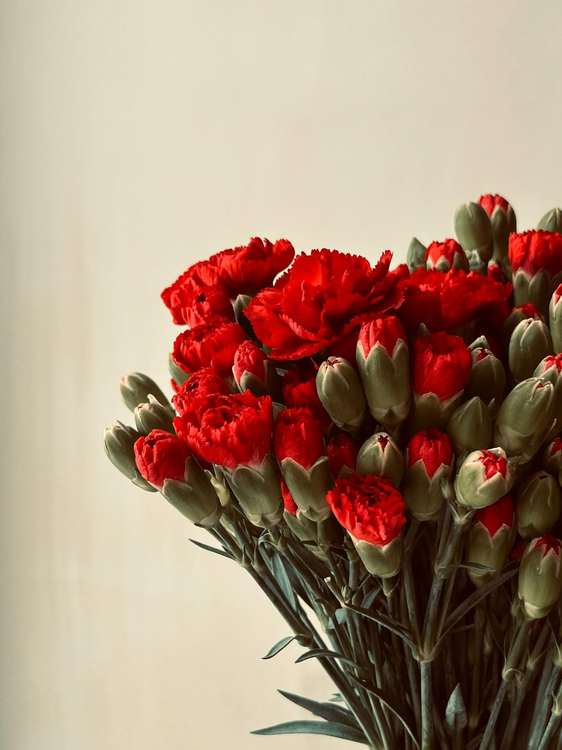
Red carnations. Worn or sent for a mother who is still living. The red is for honor, gratitude, and the love a child has for a mother who is still here to receive it. If your mother is alive and you are sending her flowers for Mother's Day, red carnations are the historically correct choice. The Mother's Day tradition in many American churches still includes wearing a red carnation on the lapel for a living mother.
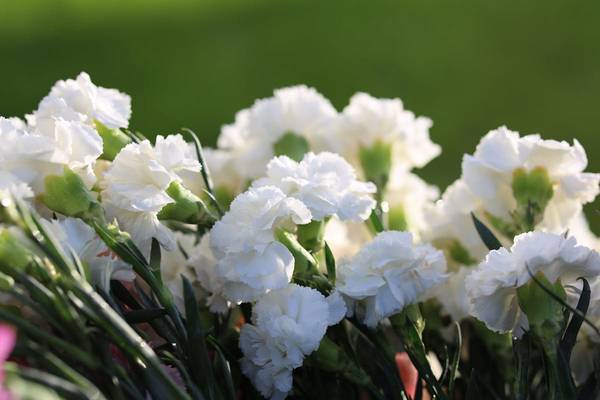
White carnations. In remembrance of a mother who has passed. This is the harder one to write. White carnations were what Anna Jarvis distributed at the original 1908 service for her own deceased mother, and the convention has held since. If you have lost your mother, a white carnation, sometimes worn pinned to clothing on Mother's Day, is the traditional way to honor her on the day. White carnations are also what people send to a friend whose mother has died, on the first Mother's Day after the loss. The flower says what the card cannot.
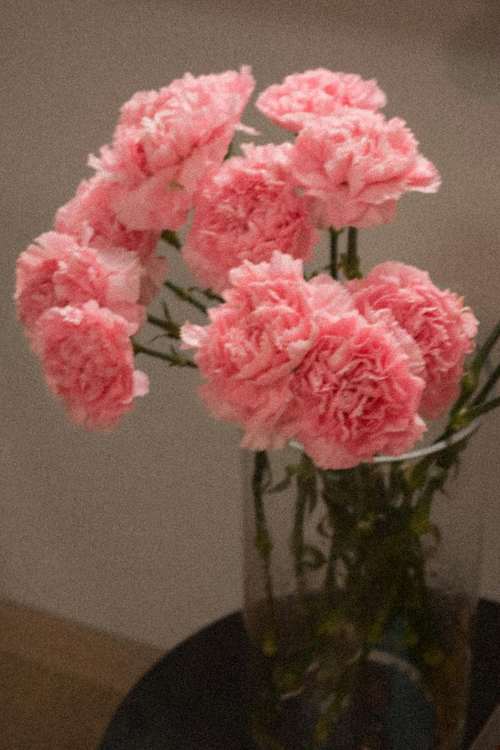
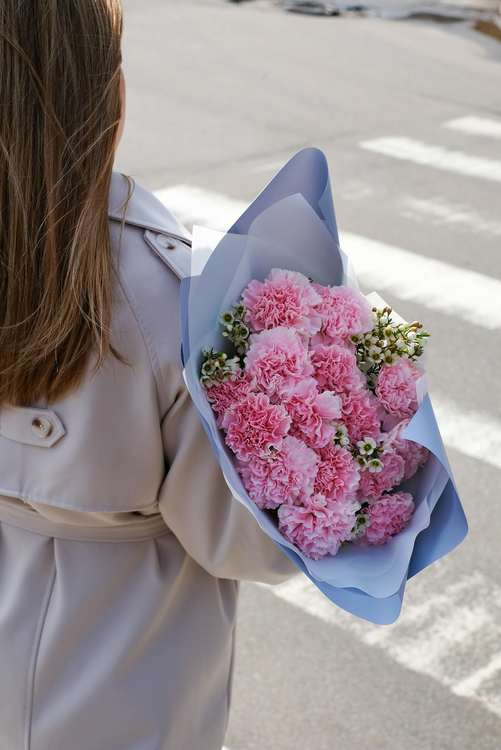
Pink carnations. A mother's love. The pink carnation has its own legend, separate from Anna Jarvis. The Christian tradition holds that pink carnations first sprouted from the ground where the Virgin Mary's tears fell at Calvary, and the flowers have come to symbolize a mother's enduring love because, the story goes, they never fade. In practice, pink carnations are the safe, warm choice. They work for mothers and stepmothers, for grandmothers, for mothers-in-law, and for the women in your life who occupy a mother-shaped role without having the title.
Yellow carnations. Less common, and one to be careful with. In the older Victorian flower language, yellow carnations meant disappointment or rejection. Modern interpretation has softened that to friendship and cheerfulness, and most younger recipients will read yellow as bright rather than loaded. But if your mother grew up with the formal flower language, send pink or red instead. Not worth the misread.
The mixed bouquet, with red, pink, and white together, is the most common Mother's Day arrangement and reads as a general expression of love. It is fine. The more specific, single-color arrangement is the one that carries the older meaning.
Why carnations and not roses
Roses are what most people default to for any flower-giving occasion, and there are reasons the carnation has held its place against that default for over a hundred years.
Vase life. Carnations last seven to fourteen days in a vase if cared for. Most cut roses give you five to seven, and grocery-store roses often less. For a flower meant to mark a single day, the difference is meaningful: a carnation arrangement is still on the table the following weekend.
Cost. A single carnation stem at retail is roughly one to three dollars. A single long-stemmed rose runs three to eight dollars, sometimes more in the days right before a holiday. A twelve-stem carnation arrangement comes in significantly under a comparable rose order, and the carnations will outlast the roses by a week.
The history. Roses are for romance. Carnations are for mothers. The tradition is specific.
Fragrance. Most commercial roses, the kind sold in twelve-stem boxes, have been bred for shipping durability and shelf life rather than smell. A grocery-store rose often smells like nothing. Carnations have a clove-like spice scent that is closer to what people imagine "flower" smelling like.
None of this is an argument against sending roses to your mother if roses are her flower. If she loves roses, send roses. The carnation argument is that they are not the budget alternative people think. They are the historically correct choice for the holiday, and they have practical advantages that hold up.
How many stems, and what to send
The standard Mother's Day carnation arrangement is twelve stems. That is enough to read as a real bouquet, fits a standard vase, and lands in the price range most people are working with.
A premium arrangement is eighteen to twenty-four stems, often with greenery and a second flower like alstroemeria or baby's breath. This is the right tier if the flowers are the main gift, not part of a larger gift, and you want the arrangement to make a visible impression.
A single carnation, pinned to a card or worn on the lapel, is also tradition. If you are going to be with your mother on Sunday and want to honor the older custom, a single red carnation pinned to your shirt before you walk in is the gesture. Some families still do this. It is a small thing. It also tells your mother, without you having to say it, that you know the history.
The delivery timing for this week
Mother's Day 2026 is Sunday, May 10. As of writing, that is one week away. The supply chain is already running at peak volume. Here is how to think about cutoffs.
Standard nationwide shipped delivery (FTD, 1-800-Flowers, ProFlowers, From You Flowers): order by Wednesday May 7, mid-day. Ship Thursday, arrive Friday or Saturday. Carrier networks get congested by Friday afternoon. Wednesday is the safe day.
Next-day delivery on a national service: Thursday May 8 is your last fully reliable day. Volume the week of Mother's Day means next-day windows fill early. Book Thursday morning if you can.
Same-day delivery in major metros via a local-florist network: Friday May 9 is generally workable. Saturday May 10 is gambling territory. Local shops will accept Saturday morning orders for Saturday afternoon delivery, but pricing climbs, inventory thins by mid-day, and Sunday morning is largely sold out.
For Sunday delivery: assume nothing. Some services run extended weekend delivery, but the windows are narrow and not guaranteed.
A standard twelve-stem carnation arrangement runs roughly thirty-five to sixty-five dollars from a national service. Premium eighteen-to-twenty-four-stem arrangements run sixty-five to a hundred and twenty. Local florists, ordered directly, often come in a touch lower for an equivalent arrangement. Pricing climbs across the board the closer to Sunday you order.
Care, once they arrive
Carnations are forgiving but they reward small attention. Trim the stems at a forty-five-degree angle when the arrangement arrives, under cool running water if possible. Use the flower food packet if one came with the bouquet. Change the water every two to three days, and re-trim the stems each time. Keep the arrangement away from direct heat, direct sunlight, and ripening fruit. Fruit gives off ethylene gas, which kills cut flowers faster than almost anything else in a typical kitchen. A vase next to a bowl of bananas will collapse in three days; the same vase on a side table in a cool room will hold for the full two weeks.
Local florist or national service
For Mother's Day, a local florist usually delivers a fresher, better-arranged bouquet at lower cost, but only if you have lead time and a real shop in your mother's town. National services trade some freshness for logistics certainty: they will get the flowers there on the date promised, almost regardless of where she lives. If your mother is somewhere you cannot verify a local shop, or you are ordering Friday for Saturday, the national service is the right call.
The week ahead
You have seven days. If your mother is alive, send red or pink carnations and let her know you know what they mean. If she is gone, white carnations on the table or pinned to your shirt, on the day, is the older way of honoring her. Either way, the flower carries a hundred and eighteen years of a daughter's gesture toward her own mother. That is the part most buyers do not know they are sending.
Browse Teleflora's Mother's Day arrangements and order before Friday May 8 for guaranteed weekend delivery. Their local-florist partner network builds the arrangement same-day from fresh stems, and the carnation collection ships in the traditional colors. Real shop, real flowers, real driver.
Frequently Asked Questions
Why are carnations the official Mother's Day flower?
The connection traces to Anna Jarvis, who organized the first official Mother's Day observance on May 10, 1908, in Grafton, West Virginia, in memory of her own mother. She distributed five hundred white carnations, her mother's favorite flower, to the mothers and children present. When Mother's Day became a federal holiday in 1914, the carnation had already been adopted as its symbol because of that single choice. The Library of Congress documents the holiday's origins and Jarvis's role.
What do the different carnation colors mean for Mother's Day?
Red carnations honor a mother who is still living and are traditionally worn on the lapel for a living mother. White carnations are sent in remembrance of a mother who has passed, following Anna Jarvis's original 1908 gesture. Pink carnations symbolize a mother's enduring love and are the safe, warm choice for stepmothers, grandmothers, and mother-figures. Yellow historically meant disappointment, so send pink or red if your recipient knows the older flower language.
How long do carnations last compared to roses?
Carnations last seven to fourteen days in a vase with basic care, which makes them the longest-lasting common cut flower. Most cut roses give you five to seven days, and grocery-store roses often less. For a flower meant to mark a single day and stay attractive into the following weekend, carnations have a real practical edge.
Are carnations a cheap or budget flower?
They cost less than roses, but that is an advantage rather than a sign of low quality. A single carnation stem runs roughly one to three dollars versus three to eight for a long-stemmed rose, and a twelve-stem arrangement comes in well under a comparable rose order while lasting about a week longer. They are the historically correct Mother's Day flower, not the budget fallback most buyers assume.
How many carnation stems should I send for Mother's Day?
The standard arrangement is twelve stems, which reads as a real bouquet and fits a standard vase. A premium arrangement runs eighteen to twenty-four stems with greenery and a second flower like alstroemeria. A single red carnation pinned to a lapel or card is also traditional and signals that you know the holiday's history.
The National Garden Bureau and university extension programs publish background on carnation history and care for readers who want to go deeper.