Anniversary Flower Meanings by Year (And What Couples Actually Buy)
Quick answer: Each wedding anniversary has a traditional flower from a Victorian-era chart: carnations (year 1), daisies (year 5), daffodils (year 10), roses (year 15), iris (year 25), and yellow roses (year 50), among others. The chart only has real cultural traction at the milestone years (1, 5, 10, 15, 25, 50). For the in-between years, most couples ignore it and order whatever has become "their" flower.
There is a Victorian-era list of flowers assigned to each wedding anniversary year. Most people have never heard of it. The few who have heard of it tend to discover it sometime around their fifth anniversary, looking up "what flower for fifth wedding anniversary" and finding the chart.
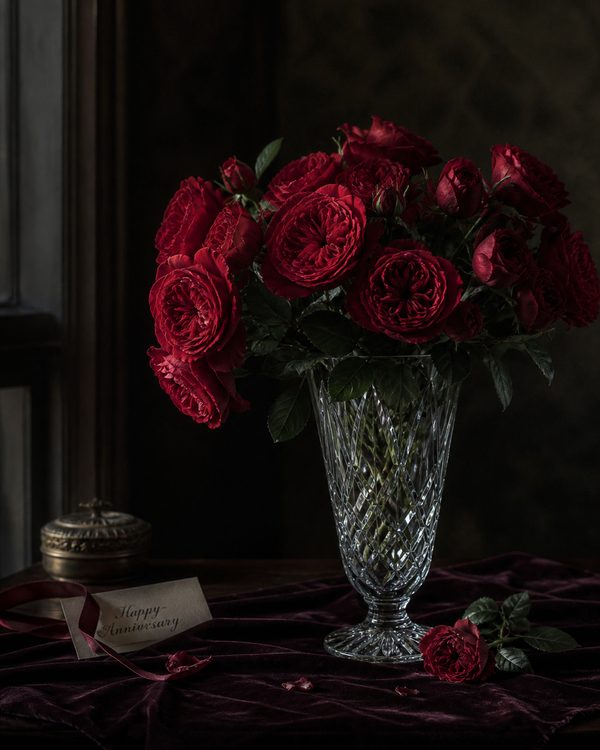
I owned a flower shop for fifteen years. Anniversary orders were a steady current of weekly business, ranging from the first-year couple still figuring out their gift habits to the fortieth-year couple where the husband has been ordering the same arrangement, the same date, every year. I have filled probably ten thousand anniversary orders. I know which years on the list actually matter to the recipients and which ones are charts on the internet that nobody follows.
What follows is the year-by-year list, what each flower means in the tradition, and what people actually order when they are placing the actual order. The two are usually different. The chart says one thing. The customer says another.
The first thing to know about the chart
The traditional anniversary flower list comes from Victorian-era English custom. It was popularized in flower-shop trade publications in the early 1900s. It was never universal. The American version, the British version, and the variants you see online today differ by year and by source.
This means: if your spouse looked up the chart and you looked up a different chart, you may have different expectations of what is "correct" for your year. The honest answer is none of them are uniquely correct. Pick what works for the two of you.
The years where the chart has cultural traction are usually the milestone years (1, 5, 10, 25, 50). The in-between years are mostly ignored. I will note where the chart matters and where it does not.
Year by year
Year 1: Carnations
The first-year flower in most traditional charts. Carnations are durable, inexpensive, and available in a wide range of colors. The traditional reading: a fresh love, still proving itself, durable enough to weather the early storms.
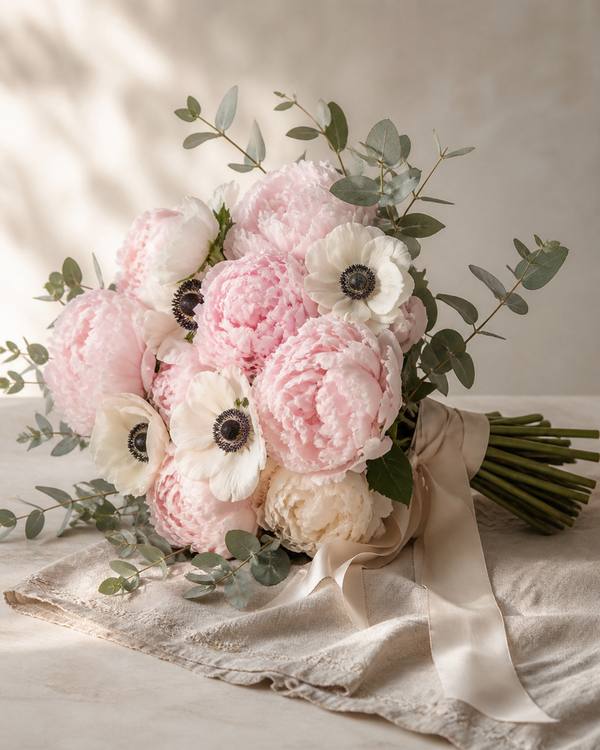
What couples actually buy in year one: something other than carnations. First-year couples are still establishing gift habits. Most pick a flower their spouse has explicitly liked or the bouquet from the wedding (peonies, garden roses, ranunculus). Carnations come up rarely. The chart loses to personal preference.
Approximate cost: $40-$80 for a mid-size first-anniversary arrangement.
Year 2: Cosmos or Lily of the Valley
The chart varies. Lily of the Valley is the British tradition. Cosmos is more common in American sources. Both are spring-blooming, delicate, sweet-smelling.
What couples actually buy in year two: continued personal preferences. The chart is rarely consulted. Year two is often the "we are settling into a pattern" year, where the gift becomes whatever shape it is going to take for the rest of the marriage.
Year 3: Sunflowers
The chart for year three is often sunflowers. Bright, durable, cheerful, large.
What couples actually buy in year three: sometimes sunflowers, more often whatever the spouse has been growing or admiring lately. Year three is when most couples have figured out what their spouse actually likes.
Year 4: Hydrangeas or Geraniums
Hydrangeas in the American tradition. Geraniums in the British. Hydrangeas are hands-down more popular in modern arrangements.
What couples actually buy in year four: hydrangeas are common because they are visually impressive. Big mophead clusters, blue or purple or white, fill a vase dramatically. The gesture matches the visual.
Approximate cost: $80-$130 for a mid-size hydrangea arrangement. Higher than carnations because hydrangeas are not cheap.
Year 5: Daisies
The first significant milestone year. Five years is when many couples start treating anniversaries with more weight. The chart says daisies, which symbolize loyal love and innocence.
What couples actually buy in year five: daisies actually do show up here. The chart has more cultural traction at year five than at years 1-4. Many couples have heard "daisies for five years" somewhere. A fresh-cut daisy bouquet is what people order if they are following the tradition.
The split is roughly: half the year-five orders follow the daisy tradition. Half upgrade to roses, peonies, or a mixed seasonal arrangement to mark the milestone with something more visually impressive.
Approximate cost: $50-$100.
Year 6: Calla Lilies
Year six's traditional flower is calla lilies. Elegant, sculptural, formal.
What couples actually buy in year six: I never had a single customer in fifteen years of operating ask for "year six anniversary flowers." Year six is a non-event year. People order whatever they ordered last year, with maybe a slight variation.
Year 7: Freesia
Sweet-smelling, multi-bloom stems. Pretty, less common than other anniversary flowers.
What couples actually buy in year seven: freesia is one of the few mid-list traditions that gets called out, possibly because it is unusual enough to feel like a deliberate choice. Couples who do consult the chart sometimes lock into freesia for year seven specifically because the smell is distinctive.
Year 8: Lilies
Year eight. The flower is lilies (Asiatic, Oriental, or stargazer depending on tradition). Lilies are dramatic, fragrant, statement-making.
What couples actually buy in year eight: lilies do show up here when people are looking for something more upscale than year-six's nondescript order. The visual is impressive enough to anchor the gesture.
Approximate cost: $70-$120.
Year 9: Birds of Paradise
The exotic option. Striking, sculptural, hard to find at smaller florists. Symbolizes joy and freedom in the chart.
What couples actually buy in year nine: Birds of Paradise are nearly impossible to source outside of specialty shops in major cities. Most year-nine orders are something else. The chart loses again.
Year 10: Daffodils
The decade milestone. The chart says daffodils, which symbolize regard and chivalry.
What couples actually buy in year ten: daffodils sometimes show up if the anniversary falls in March or April when they are seasonal. Outside that window, year ten anniversaries are usually marked with something larger and more upscale: a mixed arrangement, garden roses, peonies, an upgrade reflecting the decade.
Year ten is one of the milestone years where the gift effort goes up across the board. The flower is not the only thing happening; many couples also exchange jewelry, plan a trip, or do something larger.
Approximate cost: $80-$200 for a meaningful year-ten arrangement.
Years 11-14: Honeysuckle, Peony, Marigold, Dahlia
Year 11 (honeysuckle), year 12 (peony), year 13 (marigold), year 14 (dahlia).
The chart for these years is rarely followed. Year 12's peony designation is one of the more useful pieces of the chart because peonies are seasonal (May-June) and many anniversaries fall in that window. If you have a May or June anniversary at year 12, peonies are a natural and beautiful choice.
Year 15: Roses
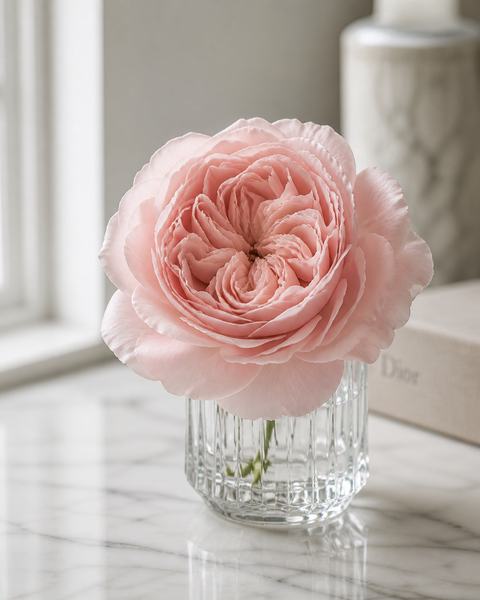
Year fifteen. Roses. The chart and the actual purchases both align here.
What couples actually buy in year fifteen: roses, often a dozen long-stem in a single color or two-dozen in a complementary palette. Year fifteen is one of the years where the tradition has full cultural penetration.
Approximate cost: $80-$150 for two dozen.
Years 16-24
The chart fills these in (year 20 is usually aster), but the milestone gravity is concentrated at year 25 rather than these in-between years. Most year 16-24 orders are continuations of the couple's standard practice.
Year 25: Iris
Silver anniversary. The chart says iris.
What couples actually buy in year twenty-five: iris does come up because year 25 is a major milestone with broad social attention. The arrangement is usually larger and more formal than typical anniversary orders. Many year-25 orders include silver-toned containers or accents to nod to the silver designation.
Year 25 is one of the few years where I had customers explicitly ask for "the traditional flower for our 25th." About half the time.
Approximate cost: $100-$250.
Years 26-49
Mostly non-events for the chart. Couples who reach these years have usually established their own pattern long ago. The flower they order is the flower that has come to mean their relationship.
Year 50: Yellow Roses or Violets
Golden anniversary. The chart says yellow roses (American) or violets (British). Yellow roses are vastly more common in modern orders.
What couples actually buy in year fifty: yellow roses, often two dozen or more, often with gold-toned accents. Year fifty is the second-most-traditional anniversary year (after 25) for chart-following.
Approximate cost: $150-$350 for a substantial year-fifty arrangement.
Which years actually matter for the gesture
If you are starting to think about anniversary flowers and you do not have a long history yet, these are the years where the gesture deserves more than the default.
Year 1. Establishing the pattern. Whatever you order on year one is what your spouse will half-expect every year afterward. Pick something you can sustain.
Year 5. The first real milestone. Worth marking with a step up from years 2-4. Daisies if you want to follow tradition. Peonies if year five lands in May-June. Otherwise something seasonal and personal.
Year 10. Decade. Worth a meaningful upgrade. The flowers are part of the gesture; many couples also do something bigger (trip, jewelry, dinner).
Year 15. Mid-life milestone. Roses are traditional and they actually get ordered. Worth two dozen rather than one.
Year 25. Silver. The big one. Many couples bring in family. The flowers should reflect the scale of the day.
Year 50. Gold. Yellow roses and a big arrangement. Often a celebration with extended family.
The in-between years matter less. Whatever pattern you have established carries.
How to order
Anniversary orders are almost always a personal-recipient delivery, often to a home address or workplace. For local recipients, a neighborhood florist will build the better arrangement. For long-distance gifts (in-laws, anniversary surprise to a partner who is traveling, gifts to elderly parents), a national service.
For the milestone years (5, 10, 15, 25, 50), the spend justifies a fresh-arranged delivery from a local florist if possible. Teleflora's anniversary collection routes orders to a local florist near the recipient and includes anniversary-specific designs with appropriate palettes. For non-milestone years where you just want a steady annual gesture, any of the four major delivery services work fine. See Best Flower Delivery Services Compared for the side-by-side.
What I tell couples who ask me
The chart is interesting, not binding. Use it on the milestone years if you want a starting point. Ignore it the rest of the time. The arrangement that matters most over the long run is the one that becomes "your" anniversary flower, whatever that ends up being. The couples I knew who had been together longest tended to have a single recurring choice that meant more than any chart year ever would.
The flowers, in the end, are not the thing. The fact that you remembered to send them is. Send something. Pick from this list if you need a starting point. Then build your own pattern.
Frequently Asked Questions
What is the traditional flower for a 5th wedding anniversary?
Daisies are the traditional fifth-anniversary flower in most charts, symbolizing loyal love and innocence. Five years is the first milestone where the tradition has real cultural traction. In practice about half of year-five orders follow the daisy tradition and half upgrade to roses or peonies to mark the milestone more dramatically.
What flower represents a 25th wedding anniversary?
Iris is the traditional flower for the 25th (silver) anniversary. Because year 25 is a major milestone with broad social attention, many couples explicitly ask for it, and arrangements are often larger, more formal, and accented with silver-toned containers to nod to the silver designation.
Are anniversary flower charts standardized?
No. The list comes from Victorian-era English custom and was popularized in early-1900s flower-shop trade publications. The American version, the British version, and the variants you see online differ by year and source, so none is uniquely "correct." Pick whichever works for the two of you.
Which anniversary years are worth spending more on flowers?
The milestone years carry the most weight: year 1 (establishing the pattern), year 5 (first real milestone), year 10 (decade), year 15 (roses, traditionally two dozen), year 25 (silver), and year 50 (gold, usually yellow roses). The in-between years matter less, and whatever pattern you have established carries through them.
When are peonies a good anniversary flower?
Peonies are the traditional year-12 flower, but they shine for any spring anniversary. They are seasonal in May and June, so a May or June anniversary at almost any year is a natural fit for fresh peonies. See USDA floriculture statistics for context on US cut-flower seasonality.
Further reading
For the broader gifting-by-relationship guide, see Mother's Day Flower Guide by Relationship. For sympathy-occasion etiquette, see Sympathy Flowers Etiquette. For the four major flower delivery services compared, see Best Flower Delivery Services Compared.
The American Floral Endowment publishes seasonal availability charts useful for planning anniversaries that coincide with peak flower seasons.